
SHEET /classroom · FIVE LESSONS
MoleculeFinder for the classroom
Five lessons from everyday chemistry that MoleculeFinder already covers. Each has a few facts read from the site's own records, its molecules as cards you can put on a class page, and the page or tool that goes further. Every value carries its source label. The molecule descriptions are free to reuse under CC0 1.0. How to embed a card.
Coffee and caffeine
A cup of coffee is a mixture of molecules: MoleculeFinder's coffee page lists 14 of them.
Caffeine (C8H10N4O2) is the best known. Theobromine (C7H8N4O2), the stimulant in chocolate, differs from it by one CH2 group.
The dose lens puts an animal LD50 next to a body weight, to show what the measurement means and what it does not.
What's in coffeeThe dose lensCaffeine vs theobromine
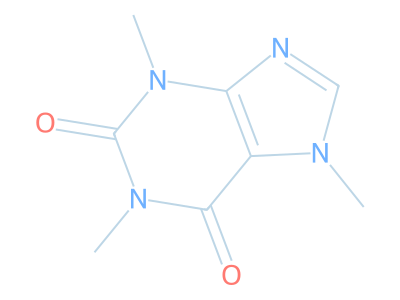
The molecule behind coffee's lift: it keeps you feeling alert by getting in the way of your brain's own sleepiness signal.
LD50 192 mg/kg (rat, oral) from source PubChem
An LD50 is an animal study measurement, not a dose for a person.
<script src="https://moleculefinder.com/embed.js" data-molecule="caffeine"></script>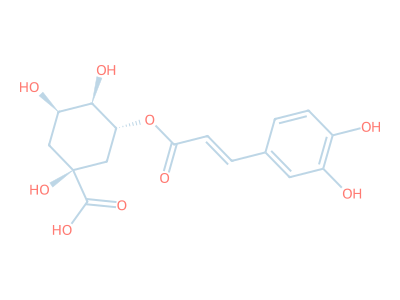
A big part of coffee's tang and brown color, and one of the most abundant antioxidants in a typical cup.
GHS hazard label: signal word Warning; Irritant from source PubChem
<script src="https://moleculefinder.com/embed.js" data-molecule="chlorogenic-acid"></script>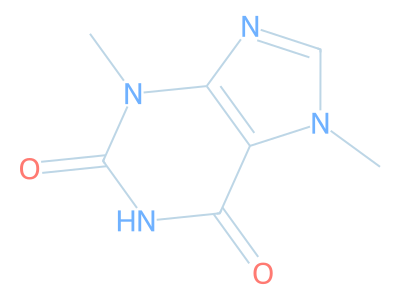
Chocolate's gentle stimulant, a milder cousin of caffeine that gives cocoa its lingering lift and faint bitterness.
LD50 300 mg/kg (dog, oral) from source PubChem
An LD50 is an animal study measurement, not a dose for a person.
<script src="https://moleculefinder.com/embed.js" data-molecule="theobromine"></script>Chili heat and the Scoville scale
The heat of a chili pepper comes from capsaicinoids, molecules that set off the nerves that sense heat.
The Scoville scale rates that heat. Pure capsaicin rates about 16,000,000 Scoville heat units and dihydrocapsaicin about 15,000,000; piperine, the bite of black pepper, about 100,000.
That makes capsaicin about 160 times hotter than piperine, a comparison the Scoville comparer draws for any two.
Scoville comparerWhat's in hot sauceThe spiciest molecules
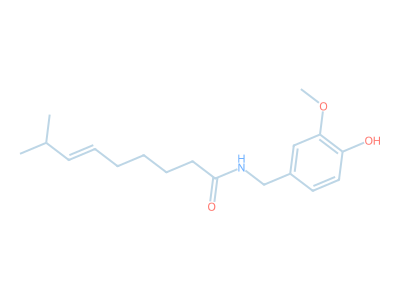
The molecule that makes chili peppers hot; it trips the same nerves that sense heat, so your mouth reads a burn that is not really there.
LD50 47.2 mg/kg (rat, oral) from source PubChem
An LD50 is an animal study measurement, not a dose for a person.
<script src="https://moleculefinder.com/embed.js" data-molecule="capsaicin"></script>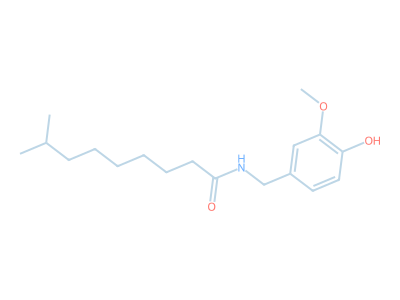
The second most abundant capsaicinoid in chili peppers, about as hot as capsaicin itself and part of what shapes a pepper's particular burn.
GHS hazard label: signal word Danger; Toxic, Irritant from source PubChem
<script src="https://moleculefinder.com/embed.js" data-molecule="dihydrocapsaicin"></script>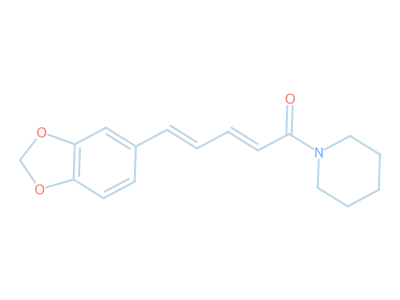
The bite of black pepper, a gentler relative of chili heat that gives pepper its sharp, warming kick.
GHS hazard label: signal word Danger; Toxic from source PubChem
<script src="https://moleculefinder.com/embed.js" data-molecule="piperine"></script>Sugars and sweeteners
Sweetness is measured against table sugar, sucrose, which the scale sets at 1.
Aspartame rates about 200 times as sweet and sucralose about 600.
Compare the formulas of sucrose, C12H22O11, and sucralose, C12H19Cl3O8: three chlorine atoms stand where three hydroxyl groups were.
The sweetest moleculesWhat's in table sugarWhat's in diet soda
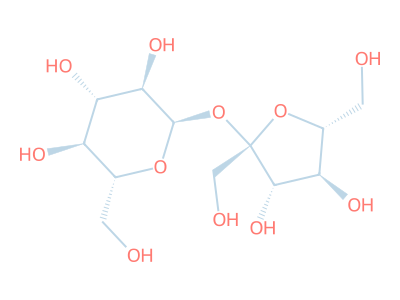
Table sugar: one glucose joined to one fructose. It is the reference point the whole sweetness scale is measured against, at exactly 1 times sweet.
LD50 29,700 mg/kg (rat, oral) from source PubChem
An LD50 is an animal study measurement, not a dose for a person.
<script src="https://moleculefinder.com/embed.js" data-molecule="sucrose"></script>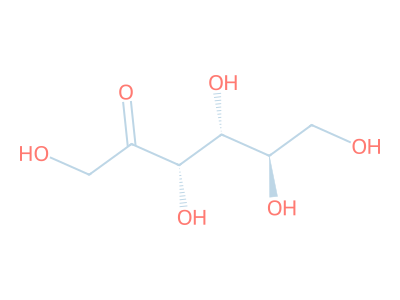
Fruit sugar, the sweetest of the common sugars. Half of table sugar and most of high-fructose corn syrup is this molecule.
<script src="https://moleculefinder.com/embed.js" data-molecule="fructose"></script>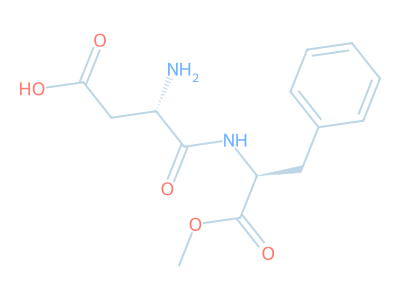
The sweetener in blue packets and most diet sodas, about 200 times sweeter than sugar. It is a dipeptide, so it carries a phenylalanine warning label.
<script src="https://moleculefinder.com/embed.js" data-molecule="aspartame"></script>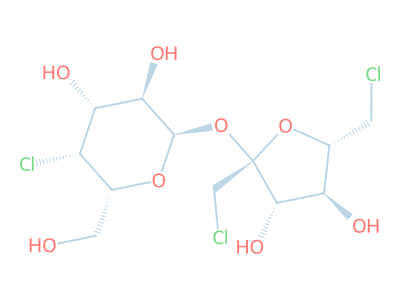
The sweetener in yellow packets, sold as Splenda. It is table sugar with three chlorine atoms swapped in, which makes it 600 times sweeter and indigestible.
<script src="https://moleculefinder.com/embed.js" data-molecule="sucralose"></script>What's in toothpaste
A toothpaste label lists its active ingredients separately from its inactive ones.
On Crest Pro-Health Sensitivity Relief the active ingredients are potassium nitrate and sodium fluoride. Its inactive ingredients include sorbitol and saccharin, two molecules from the sweeteners lesson.
Every product page on MoleculeFinder reads its list from the label itself.
Crest Pro-Health Sensitivity ReliefColgate Cavity ProtectionAnd a mineral sunscreen
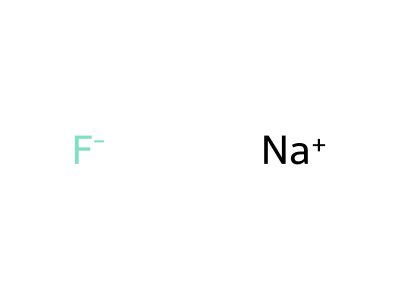
The fluoride in toothpaste and in fluoridated tap water. It swaps into tooth enamel and makes the resulting mineral harder to dissolve in acid.
LD50 44.3 mg/kg (mouse, oral) from source PubChem
An LD50 is an animal study measurement, not a dose for a person.
<script src="https://moleculefinder.com/embed.js" data-molecule="sodium-fluoride"></script>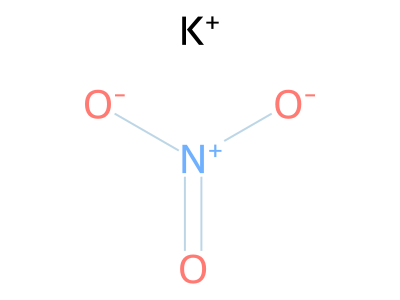
Saltpeter, one of the three ingredients of gunpowder, and the curing salt that keeps ham pink. It also sells as stump remover and as fertiliser.
LD50 3,015 mg/kg (rat, oral) from source PubChem
An LD50 is an animal study measurement, not a dose for a person.
<script src="https://moleculefinder.com/embed.js" data-molecule="potassium-nitrate"></script>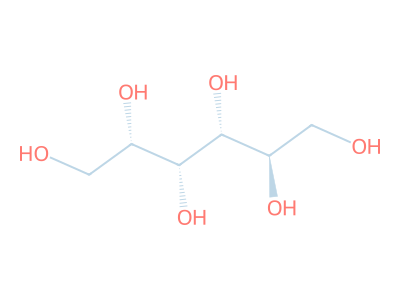
The sugar alcohol in sugar-free gum and diet candy. It is poorly absorbed, which is why the label warns that excess may have a laxative effect.
LD50 15,900 mg/kg (rat, oral) from source PubChem
An LD50 is an animal study measurement, not a dose for a person.
<script src="https://moleculefinder.com/embed.js" data-molecule="sorbitol"></script>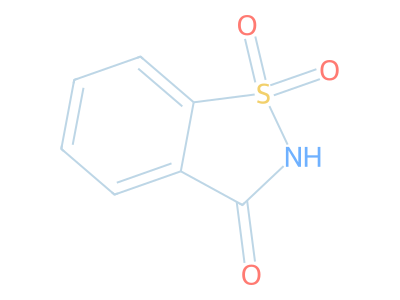
The oldest artificial sweetener, sold in pink packets since 1879. About 300 times sweeter than sugar, with a metallic aftertaste at higher concentrations.
LD50 14,200 mg/kg (rat, oral) from source PubChem
An LD50 is an animal study measurement, not a dose for a person.
<script src="https://moleculefinder.com/embed.js" data-molecule="saccharin"></script>PFAS
PFAS, per- and polyfluoroalkyl substances, are molecules whose carbon chains carry fluorine in place of almost every hydrogen.
PFOA's formula, C8HF15O2, has 8 carbon atoms, 15 fluorine atoms and 1 hydrogen.
MoleculeFinder's PFAS page lists 4 of them, each checked against its formula.
PFAS on MoleculeFinderOrganohalogens
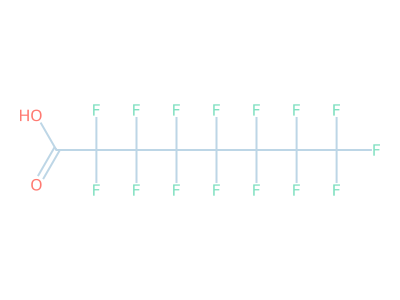
PFOA, a fully fluorinated PFAS surfactant used in fire-fighting foams, paints, polishes, carpets and food-contact packaging.
LD50 189 mg/kg (rat, other) from source PubChem
An LD50 is an animal study measurement, not a dose for a person.
<script src="https://moleculefinder.com/embed.js" data-molecule="perfluorooctanoic-acid"></script>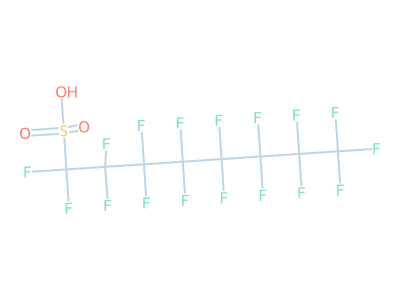
PFOS, a PFAS surfactant once used in fire-fighting foams, floor polishes, metal plating and circuit-board etching. 3M phased it out by 2001.
LD50 154 mg/kg (rat, oral) from source PubChem
An LD50 is an animal study measurement, not a dose for a person.
<script src="https://moleculefinder.com/embed.js" data-molecule="perfluorooctanesulfonic-acid"></script>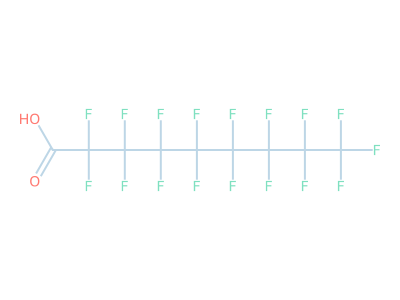
PFNA, a nine-carbon PFAS surfactant used mainly as a processing aid in making fluoropolymers, and in fire-fighting foams and textile finishes.
GHS hazard label: signal word Danger; Corrosive, Irritant, Health hazard from source PubChem
<script src="https://moleculefinder.com/embed.js" data-molecule="perfluorononanoic-acid"></script>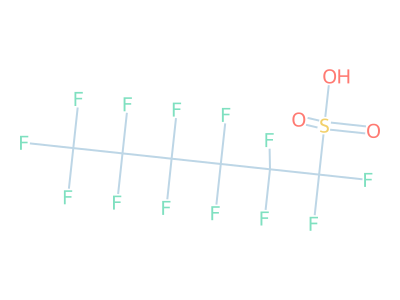
PFHxS, a six-carbon PFAS once used in fire-fighting foams and carpet stain and water repellents, phased out under US EPA rules.
GHS hazard label: signal word Danger; Corrosive, Irritant, Health hazard from source PubChem
<script src="https://moleculefinder.com/embed.js" data-molecule="perfluorohexanesulfonic-acid"></script>